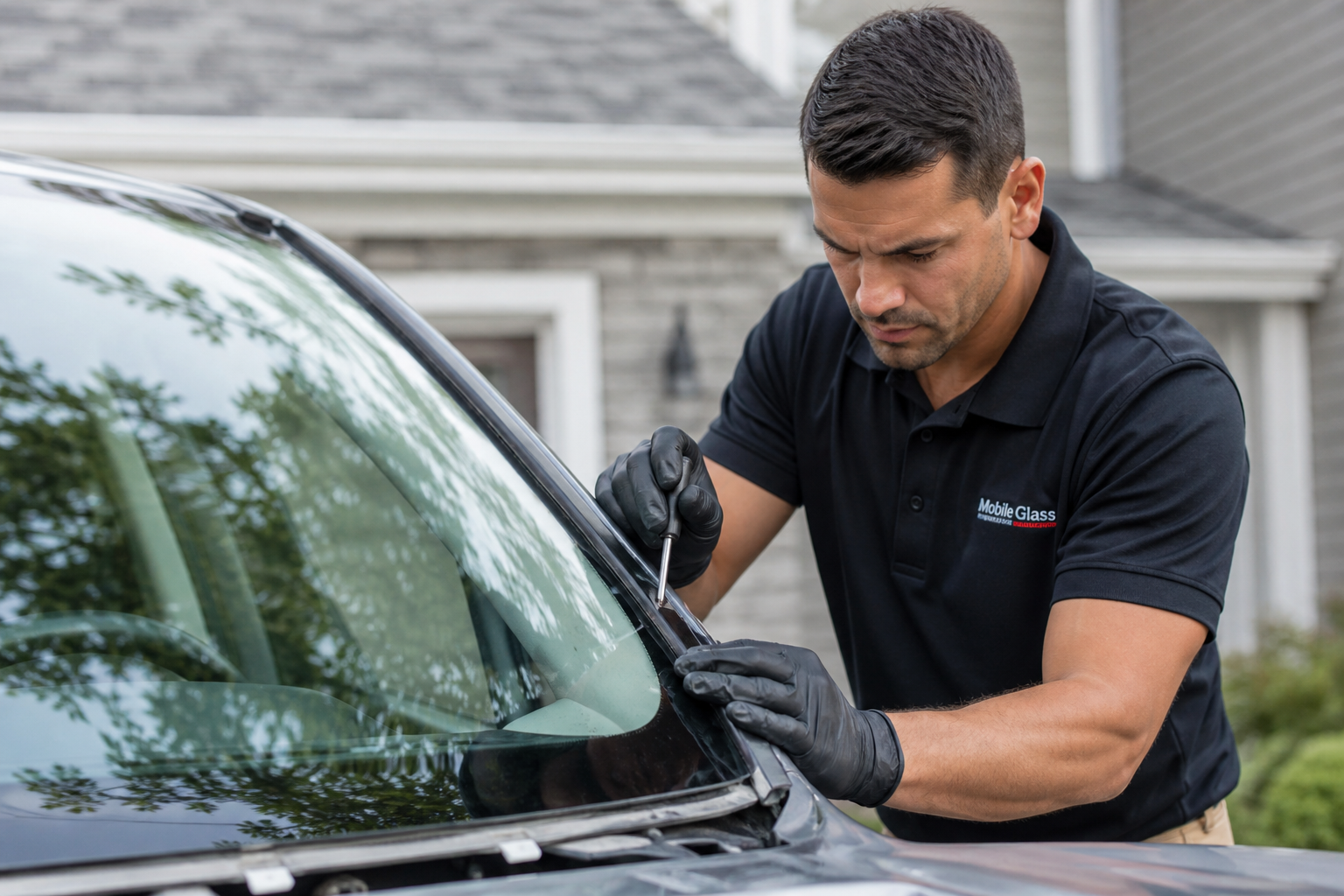
A cracked windshield is one of those problems that's easy to put off — until it suddenly becomes urgent. In Mississippi's climate, "putting it off" can mean a small chip turns into a full crack overnight, or a manageable crack spreads to the point where it blocks your line of sight. Acting quickly is almost always the better financial and safety decision.
Here's exactly what to do, from the moment you notice a crack to the moment your windshield is repaired.
Step 1: Stay Calm and Pull Over Safely If Needed
If the crack appears while you're driving — from a rock strike or sudden temperature change — don't panic. The windshield will still hold for the moment. Gradually reduce speed. Don't brake suddenly or make sharp turns. Vibration accelerates crack spreading, so a smooth, controlled stop is your priority.
Once you're safely stopped, assess whether it's safe to continue driving. A small chip away from your direct sightline: likely okay for a short drive. A crack that runs across your field of vision or reaches the edge of the glass: call for mobile service before continuing.
Step 2: Assess the Damage — Chip or Crack?
Understanding what you're dealing with determines your options:
- A chip is a small impact point, usually the size of a quarter or smaller. The glass is missing a fragment. Chips are often repairable with resin injection if caught early.
- A crack is a line that extends from the chip — or appears on its own from thermal stress. Cracks longer than three inches typically require full replacement.
- An edge crack — one that starts within two inches of the windshield border — is almost always a replacement situation regardless of length, because edge cracks compromise the structural seal.
Step 3: Don't Make It Worse
There are several common mistakes that cause minor damage to become major:
- Blasting the defroster or AC immediately — the sudden temperature change across the glass creates thermal stress that expands chips into cracks. Give the cabin time to equalize before using climate control at full power.
- Parking in direct sun — interior temperatures in a parked Mississippi vehicle can exceed 160°F. Find shade if possible until you can get the windshield serviced.
- Going through a car wash — high-pressure water and the flex of the car wash equipment can spread a crack significantly.
- Using DIY kits improperly — over-the-counter windshield repair kits can seal a chip adequately if used correctly, but they don't work well on cracks and can actually make the glass harder for a technician to repair professionally if used incorrectly.
Step 4: Check Your Insurance Before Paying Out of Pocket
This is a step most Mississippi drivers skip — and they shouldn't. Comprehensive auto insurance policies typically cover windshield damage, and in many cases the deductible is low or waived entirely for glass claims. A two-minute call to your insurer before booking service could save you the entire cost of the repair or replacement.
Mississippi drivers: if you carry comprehensive coverage, ask your insurer specifically about glass claims. Some policies include "zero-deductible glass coverage" as a standard feature. Don't assume it comes out of pocket — it very often doesn't.
Step 5: Call for Mobile Service
Once you know the damage, call a mobile auto glass service. The key advantage of mobile repair is that you don't have to drive on a compromised windshield — and you don't have to rearrange your schedule around a shop visit. A technician comes to you, whether you're at home, work, or anywhere in the Jackson metro area.
Same-day service is often available when you call early in the day. Most chip repairs take under an hour; full replacements take 60 to 90 minutes. Call (601) 607-9968 and we'll walk you through the process.
Repair vs. Replace: The Decision Criteria
Technicians use these factors to determine whether your windshield can be repaired or needs full replacement:
- Size: Chips up to the size of a quarter, cracks up to 3 inches — often repairable. Larger damage typically requires replacement.
- Location: Damage in the driver's direct sightline (a 12-inch band in front of the steering wheel) requires replacement even if small. Cameras and sensors mounted near the windshield also affect this determination.
- Depth: Damage that penetrates through both layers of laminated glass cannot be repaired — replacement required.
- Edge proximity: Damage within two inches of the edge almost always requires replacement.
- Number of damage points: Multiple chips close together compromise structural integrity beyond what resin can restore.
A Note About ADAS Systems
Modern vehicles increasingly include Advanced Driver Assistance Systems — forward collision warning, automatic emergency braking, lane departure warning — that rely on cameras mounted to or near the windshield. When a windshield is replaced, these systems must be recalibrated to function correctly. This is not optional; a miscalibrated ADAS camera can provide false readings or fail to detect hazards entirely.
When you call for windshield service, mention if your vehicle has any of these systems. A reputable auto glass service will account for recalibration needs when scheduling your appointment.
Need Service in the Jackson Metro?
We provide mobile windshield repair and replacement throughout Jackson, Madison, Ridgeland, Brandon, Flowood, Clinton, and Byram. Call now or fill out the form to the right for a free estimate.
Call (601) 607-9968