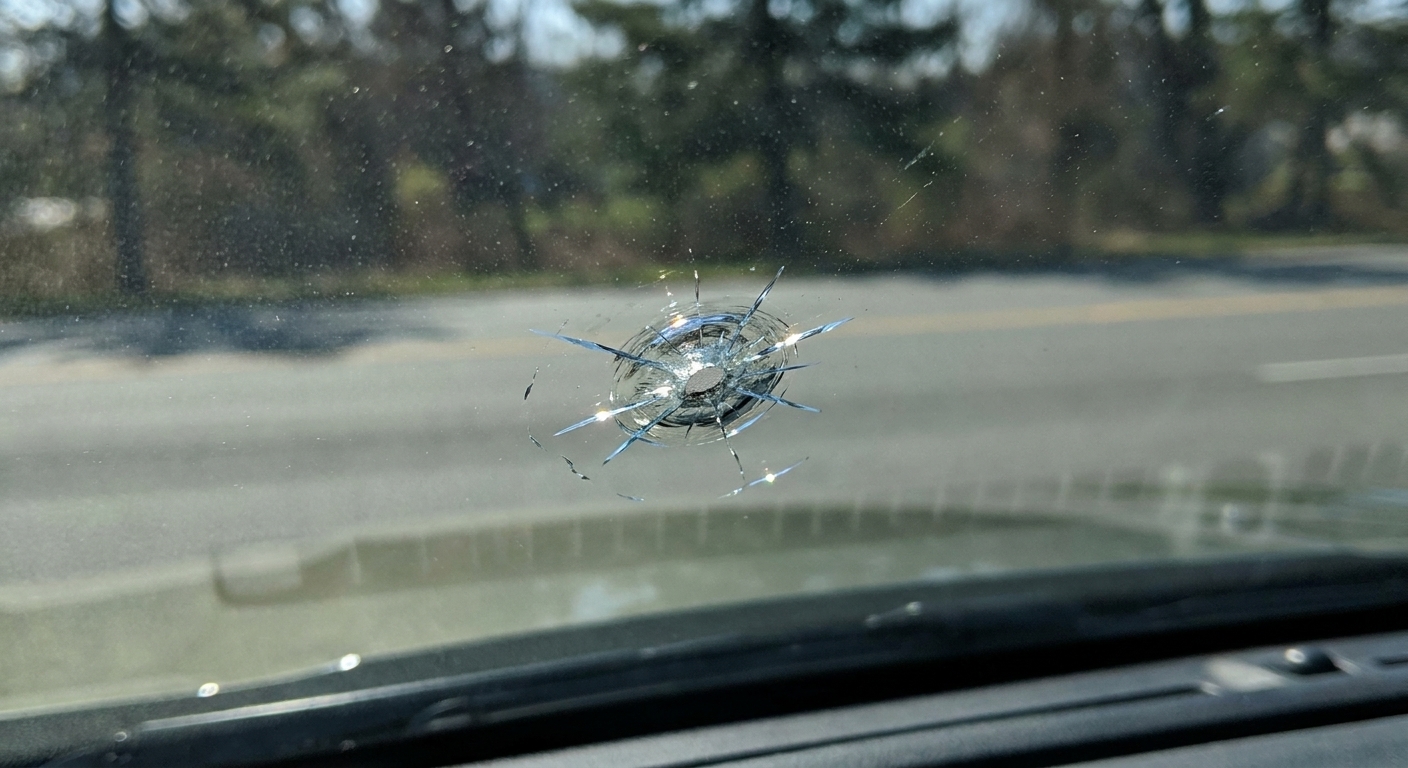
You've noticed a crack in your windshield. Maybe it's been there a few days, or maybe it appeared this morning from a piece of gravel on I-55. Either way, you're in that uncomfortable window between "I should deal with this" and actually booking a mobile appointment. The good news: there are real steps you can take to keep the crack from spreading in the meantime. The bad news: there are also several common "fixes" that will make things significantly worse.
Here's an honest breakdown of what works, what doesn't, and when to stop driving entirely.
Why Cracks Spread in the First Place
Windshield glass is laminated — two layers of tempered glass bonded to a plastic interlayer. When a crack forms in the outer layer, it creates a stress point. Three forces drive that crack further across the glass:
- Temperature differential: When the inside and outside surfaces of the glass are at different temperatures, the glass expands and contracts at different rates. In Mississippi summers, where interior car temperatures can reach 150–170°F, this differential is extreme and constant.
- Vibration: Every bump in the road sends micro-vibrations through the glass. Rough roads, highway rumble strips, and even loud bass from audio systems all contribute. Jackson's roads — particularly older city streets and Rankin County's rural routes — are harder on cracked glass than smooth highway surfaces.
- Moisture intrusion: Water that gets into the crack — from rain, morning dew, or a car wash — can accelerate spreading, especially if it freezes (rare in Mississippi but not impossible in January) or evaporates rapidly in direct sun.
Addressing these three forces is the entire strategy for slowing a crack.
Step 1: Manage Temperature — This Is the Most Important Factor
The single biggest driver of crack spreading in Mississippi is temperature stress. Here's what that means practically:
- Park in shade whenever possible. A parked car in direct sun can reach interior temperatures that create enough thermal stress to extend a two-inch crack across the entire windshield in a single afternoon. If shade isn't available, a windshield sunshade reflector is genuinely helpful — it keeps the inside glass surface cooler and reduces the differential.
- Don't blast the AC or defroster on a cold windshield. When you first get into a hot car, resist the urge to turn the AC to maximum immediately. Run it on low first and let the temperature equalize gradually over five minutes. Sudden cold air hitting a hot glass surface creates exactly the thermal shock that spreads cracks.
- Don't use the rear defroster if you have a rear window crack. The heating element embedded in the rear glass creates localized heat in the defroster lines — and if a crack runs across one of those lines, the temperature differential right at the crack can cause it to spread rapidly.
- In the morning, don't use hot water to defrost. This applies mainly to the rare Mississippi winter days with frost. Pouring hot water on a cold windshield — cracked or not — is one of the fastest ways to shatter glass entirely.
Step 2: Reduce Vibration When Driving
You may not be able to avoid driving on a cracked windshield for a day or two. If you have to drive, you can reduce the vibration load on the glass:
- Slow down on rough roads. Highway speed amplifies vibration. On I-20 or I-55, you may not be able to avoid rougher patches, but slowing to 55 mph from 70 on a particularly rough stretch makes a meaningful difference in the stress on the glass.
- Avoid aggressive lane changes and hard braking. Rapid vehicle movement creates flex that travels through the body into the glass. Smooth, gradual inputs are better.
- Lower the bass on your stereo. It sounds minor, but significant bass vibrations do transmit to the windshield. If your crack is already a concern, this is a reasonable precaution.
- Keep windows slightly cracked when driving at highway speed. Interior air pressure differentials between a sealed cabin and the outside can create suction on the windshield at highway speed. A small window gap equalizes the pressure.
Step 3: Keep the Crack Dry
Moisture in a crack accelerates deterioration of the laminate bond and can cause the glass edges to chip further. Practical steps:
- Avoid car washes entirely. High-pressure water forces moisture deep into the crack, and the flex caused by the rotating equipment can extend a crack noticeably. Hand washing with a gentle spray is safer if you must clean the exterior glass near the crack.
- Use a small piece of clear packing tape over the crack. This isn't a repair — the adhesive can actually interfere with professional repair resin if left too long — but a single layer of clear tape on the outside of the crack for a day or two keeps water out in a pinch. Don't leave it on more than 48 hours, and let your technician know it was applied.
- Avoid clear nail polish as a sealant. This is a common internet suggestion that creates real problems. Nail polish fills the crack with a material that's incompatible with professional repair resin, and it can damage the outer glass surface in a way that makes the repair more complicated and expensive. Skip it entirely.
What About DIY Windshield Repair Kits?
Hardware store windshield repair kits use a resin injection system similar to what professionals use. On a fresh, clean chip — the size of a quarter or smaller — they can work adequately. On a crack, they generally don't. The resin in consumer kits isn't formulated to flow into a crack the way professional resins are, and the injection apparatus isn't designed for crack repair geometry.
More importantly: once you've injected resin into a crack, a professional technician may not be able to clean it out and start fresh. Using a DIY kit on a crack can turn a repairable chip into a replacement situation. If you're uncertain whether your damage is a chip or a crack, call for an assessment first.
When to Stop Driving — Full Stop
Some crack situations mean you shouldn't be driving at all, regardless of how inconvenient that is:
- The crack runs through your direct line of sight — the area directly in front of the steering wheel. Even a small crack in this zone is a legal and safety issue in Mississippi.
- The crack has reached both edges of the windshield. At this point the structural integrity of the glass is significantly compromised.
- You can feel the crack through the glass when you press lightly on the outside surface — this indicates the inner layer may be compromised.
- The crack has spidered into multiple branches from a central impact point. This type of damage typically cannot be repaired regardless of size.
In these cases, call (601) 607-9968 for same-day mobile service. A technician comes to wherever you are in the Jackson metro — home, work, or a parking lot — so you don't have to drive on a windshield that's beyond safe operation.
The Bottom Line on Timing
Every day you wait is a day the crack has another opportunity to spread. Mississippi's summer heat is not forgiving — a crack that looks stable on Monday can double in length by Thursday after a few afternoons of direct sun. The difference between a repairable chip and a full windshield replacement is often a matter of days.
Mobile service appointments can frequently be booked same-day or next-day in the Jackson metro area. The cost of a repair is a fraction of a replacement. Don't let "I'll deal with it this weekend" become "now I need a whole new windshield."
Need Service in the Jackson Metro?
We provide mobile windshield repair and replacement throughout Jackson, Madison, Ridgeland, Brandon, Flowood, Clinton, and Byram. Call now or fill out the sidebar form for a free estimate.
Call (601) 607-9968